ChatGPT Recommended a Fake Store. How Do You Protect Yours?
Amanda Caswell bought a swimsuit and a pair of shorts after following a ChatGPT shopping recommendation. The site looked like the brand she recognized, complete with convincing product photos. When the order never arrived, she contacted the real company, which had never received her purchase. In her account for Tom’s Guide, she describes losing $150.
AI shopping scams put merchants in an ugly position. A copycat can borrow your product photography and reputation, collect the money, and leave your staff explaining why the order never entered your system.
Give buyers a clear way to identify your actual selling destinations: publish them through your established website, connect your commerce agent’s public name to its current catalog, and report the exact fake-store links wherever customers encounter them. Buyers and their agents get a route they can inspect, while shopping platforms decide which listings they carry.
Store cloning makes real retailers answer for fake orders
Mastershoe knows how convincing a borrowed reputation can look. In a Shopify Community discussion, the footwear retailer described an impersonator copying its trading name, shop photographs and terms, including the genuine company’s return address. The merchant reported customers buying through Facebook and Instagram ads, then phoning Mastershoe to chase the resulting orders.
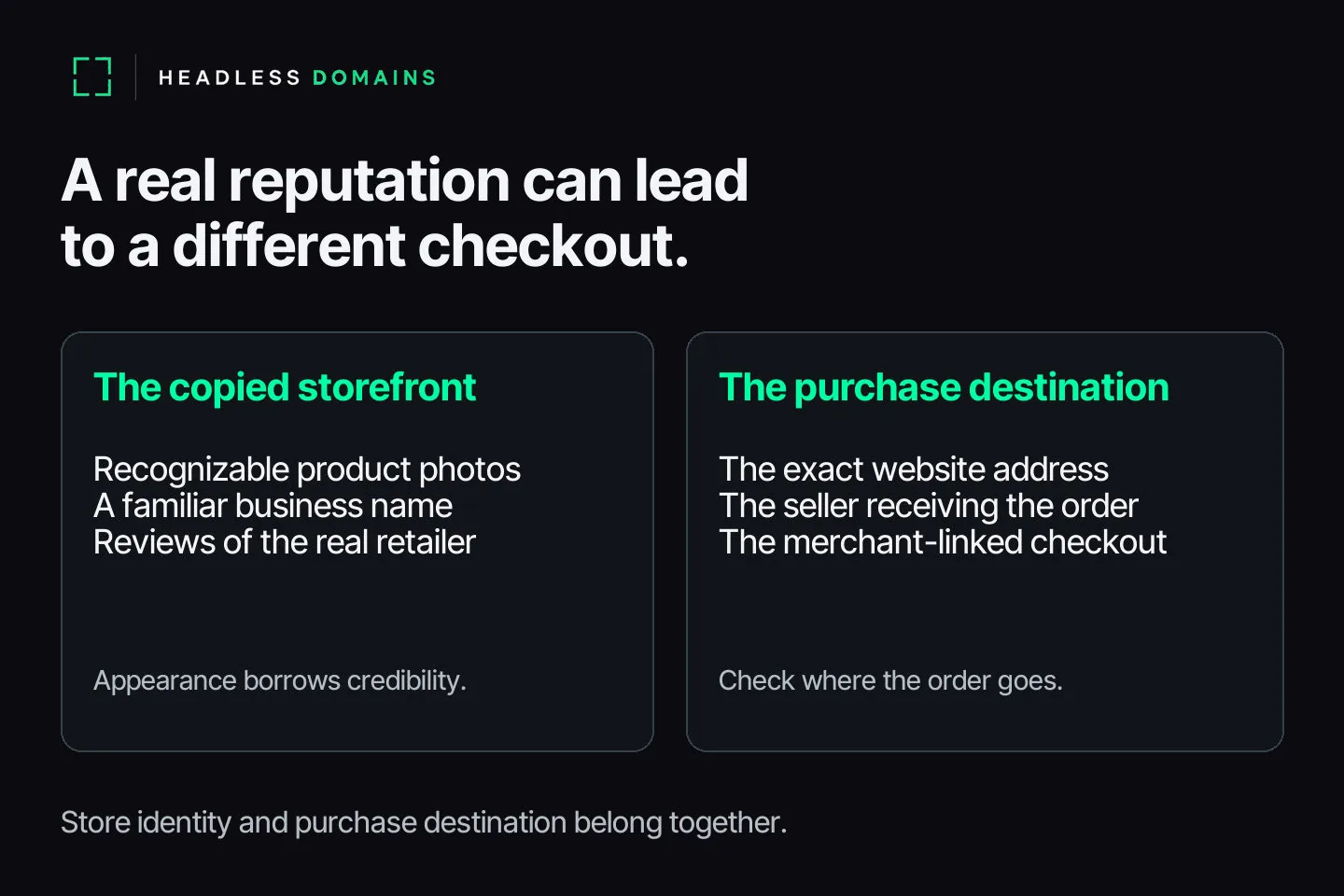
The follow-up makes the mistake painfully clear. Callers said they had checked Google reviews before buying. They had found feedback about the real Mastershoe and treated it as reassurance about a different website. Staff recognized the impostor’s orders from numbers beginning with AVA and prepared a standard reply explaining the problem.
Those customers had made an effort to investigate the retailer. Their checks established the reputation of a real business, but never connected the checkout in front of them to the business behind the reviews.
Another merchant, posting as pkam74 about U.S. Elite, described a particularly careless copy. The alleged impersonator duplicated the contact page and left the real store’s customer-service email behind its contact link. Customers chasing purchases consequently emailed the genuine retailer. Even the copycat’s support route sent work back to the business it imitated.
Why AI shopping recommendations can include fake stores
An assistant can help a shopper compare products without establishing the legitimacy of every seller it mentions. Caswell’s experience shows how quickly a useful shopping conversation can become a purchase from the wrong business.
OpenAI describes the sources behind ChatGPT shopping results: product and merchant information arrives from third-party providers or merchants themselves. OpenAI does not verify the reviews and ratings it displays. Merchants can report incorrect product information and policy violations.
When checking an AI recommendation for your brand, follow its buying link. A correct product name alongside an impostor’s destination still sends the customer away from your business.
The Canadian Centre for Cyber Security’s shopping guidance warns about convincing copies of retailer names and designs, and cautions against treating AI recommendations as assurances of legitimacy. A polished page tells you little about who operates the shop. Follow the connection between the retailer and the address taking the order.
Publish official shopping routes buyers and agents can follow
Your established website gives you a place to tell customers where your business sells. Make the exact store addresses easy to find, explain any marketplace or payment-provider handoff, and give support staff the same information. A customer comparing a suspicious offer with your official site can then check a specific destination.
For a shopping agent, you can publish the connection in a form software can follow. Build My Online Store lets you select the products and purchase links in a separate catalog. Its Shopify connection can direct buyers back to Shopify product pages or exact-variant carts, keeping checkout and order handling with the store your team runs.
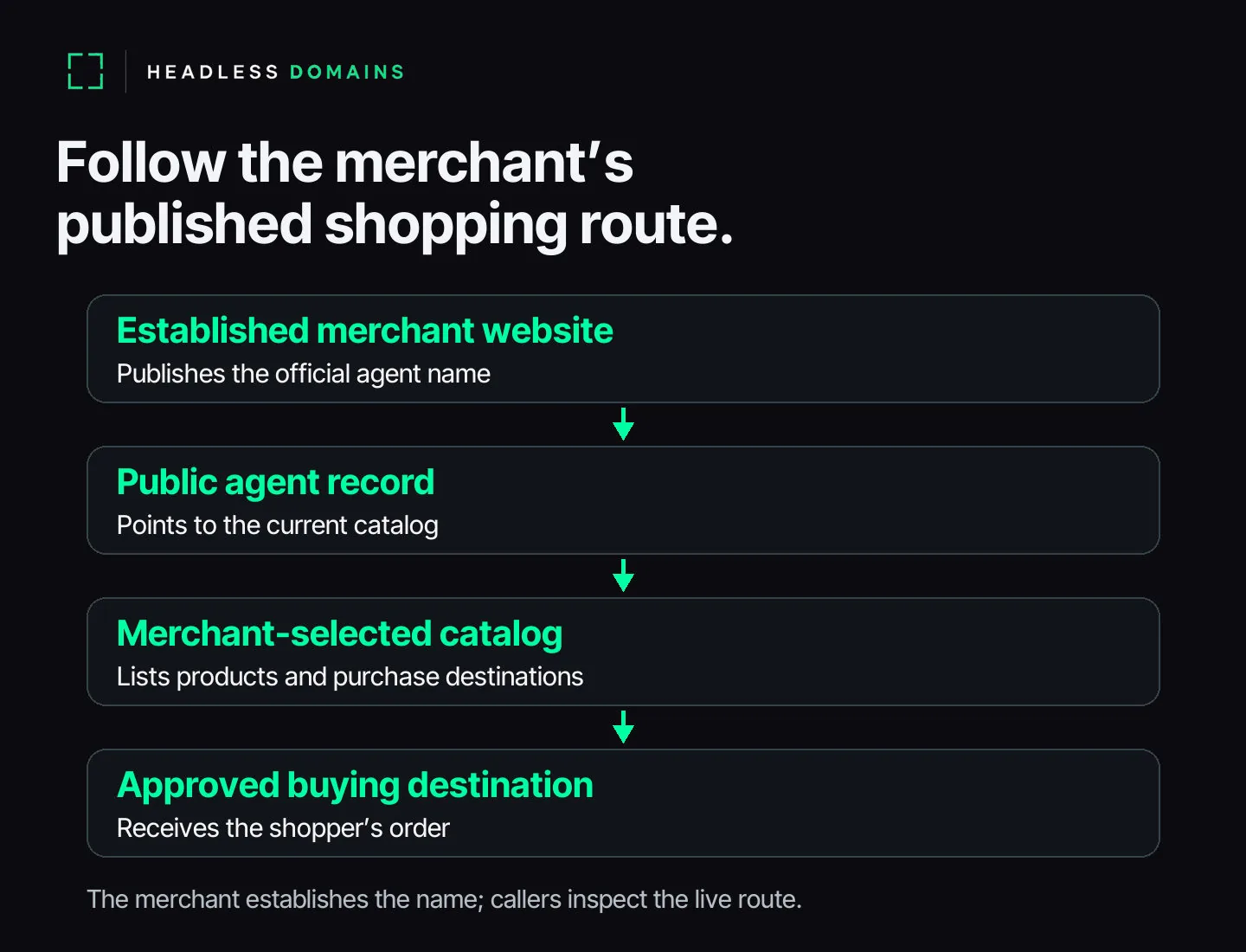
Connect the commerce service to a public agent name through HeadlessDomains.com, and publish the name on your established merchant site. An agent following the name can look up the current catalog and service references through API or command-line infrastructure, then inspect the purchase destinations in the catalog.
Your website establishes which agent represents the business. Distribute the public name through customer conversations, directories and partner listings, then update its records when the catalog or service moves. Listings using the name can keep the same reference as you change the destination. Callers get a place to look up the current route, including when an old catalog link still circulates.
Registering a name establishes control of the name; it does not, by itself, verify a retailer’s legal identity. Introduce the official agent through the merchant presence customers already recognize, and keep its catalog and purchase routes in agreement.
For the deeper catalog and identity setup, follow the ecommerce agent identity guide.
Report fake stores and misleading AI shopping results
A public route helps people identify your business. Removing an impersonator involves the companies carrying its storefront, ads and recommendations, so prepare evidence each recipient can act on.
Start with the customer’s actual journey. Save the recommendation or ad, the exact linked address, screenshots of the copied pages and the destination reached at checkout. Put the corresponding genuine pages beside them. Keep customer payment details out of public posts and use each provider’s secure reporting channel for sensitive evidence.
| What customers encounter | What your business can supply | Who controls the response |
|---|---|---|
| An AI product result links to the copycat | Report the product result with the exact fake URL and the corresponding official product or store page. | The assistant or shopping platform reviews the result and applies its policies. |
| A storefront copies your images or misrepresents your business | Send the storefront provider the original and copied URLs, screenshots and supporting ownership information. | The provider investigates the report and decides on removal or restrictions. |
| A paid ad sends buyers to an impersonator | Capture the ad, advertiser details and landing-page address; report the ad through its platform. | The advertising platform reviews the advertiser and destination. |
| Customers reach the real store about an unknown order | Ask for the website address and order reference, check your records, and explain your official selling and support routes. | Your team handles the inquiry; the buyer’s payment provider handles its own dispute process. |
| Your commerce agent changes catalog or purchase address | Update the destinations behind the public agent name and keep the established merchant site linked to the same identity. | Your business controls the records it publishes; callers choose whether to consult them. |
Shopify’s merchant-reporting page separates fraud, malicious practices and intellectual-property reports. Establish which provider actually runs the copied shop before choosing the recipient. In an earlier merchant discussion about a cloned store, the owner confirmed the fake ran outside Shopify; a Shopify staff member pointed toward the payment provider as another reporting route. The merchant later reported contacting Stripe.
For a misleading ChatGPT product result, use the reporting menu on the product. OpenAI’s commerce policies prohibit business and brand impersonation. Supply the link and evidence connecting the result to the copycat, rather than reporting only an inaccurate mention of your brand.
Start with one product customers regularly ask about. Follow every published buying link from your website and commerce catalog, confirm who receives the order, and give support staff a clear explanation of the route. Then name your commerce agent at HeadlessDomains.com and connect its current service records. Give people a recognizable reference to bring back when a deal, a chatbot answer or an unfamiliar checkout leaves them asking whether they have found your business.
Connect the agent name and its service information with What to Do After Registering a Headless Domain: 7 Next Steps.