ChatGPT Ads Can Talk. Who Speaks for Your Store?

After ChatGPT recommended the wrong auto part, the customer initially blamed the shop, leaving the seller to answer for advice they hadn’t given. The seller, posting as 5RndGrp on r/shopify, asked where the shop had ever claimed the part would fit.
OpenAI now puts business representatives inside ChatGPT ads, raising a practical question for merchants: what can an advertiser control when an AI agent speaks for the business?
How ChatGPT Sponsored Agents turn ad clicks into conversations
OpenAI’s Sponsored Agents let shoppers move from an ad into a clearly labeled business conversation, ask follow-up questions and continue to the advertiser’s website. OpenAI currently runs the format with selected US advertisers.
The parts seller’s experience involved an independent ChatGPT recommendation. A Sponsored Agent speaks for an advertiser in a separate conversation, and buying an ad doesn’t change ChatGPT’s independent answers.
ChatGPT orders on Shopify: what two sellers wanted to know
In the same Shopify discussion, a merchant welcomed the growing number of ChatGPT orders but wanted to see the questions customers had asked before finding such a niche product. Shopify already showed where the orders came from; the merchant wanted customers’ wording to improve product descriptions and blog posts, and was considering asking buyers directly.
WeatherWool’s owner had resisted affiliate offers and outside retailers because he wanted to sell directly to customers, so Shopify’s announcement of another AI sales channel came as a surprise. In his September 9 account, he described opening the settings and finding WeatherWool on ChatGPT, Microsoft Copilot and Meta, with one ChatGPT sale already recorded. He didn’t remember authorizing the agents.
Shopify’s live inventory connection addressed a practical concern about selling in several places: each channel knew what his website offered. He decided to let the channels run and watch the results.
He also put ChatGPT’s sales pitch to a test, asking whether WeatherWool was worth the money. The detailed answer impressed him and cited a jacket comparison by one of his customers, bringing an outside writer’s assessment into the sales conversation. For merchants, the work extends from publishing accurate product facts to earning credible coverage of what makes their products worth buying.
What can merchants control in AI sales conversations?
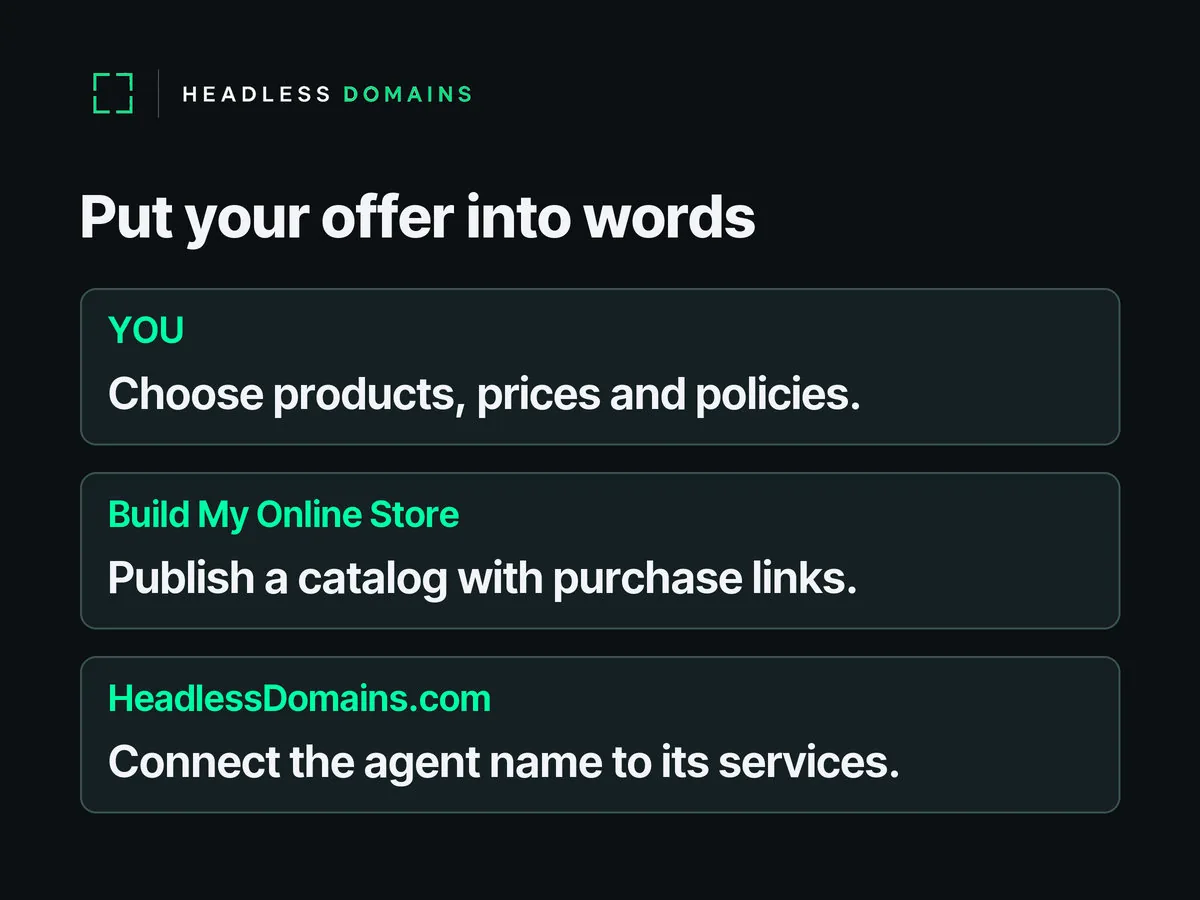
Control starts with the material your business publishes, whether you’re approving ad copy, correcting a store policy or choosing which products an agent can find in your catalog.
| Merchant concern | Control available | What you can change |
|---|---|---|
| An AI-generated ad overstates your offer | OpenAI lets advertisers review and edit suggested ad copy and images. | Approve the wording and images before adding the ad to a campaign. |
| AI agents receive outdated store information | Shopify’s Knowledge base drafts facts from storefront pages for merchant review. | Edit the store facts and decide what to publish, including information about services and policies. |
| A separate sales channel shows the wrong products | Build My Online Store provides product-selection controls for each storefront and feed. | Choose the range for the Build My Online Store channel while your main store keeps its full assortment. |
| A buy link sends customers to the wrong place | Build My Online Store publishes merchant-selected purchase links, including Shopify product and cart links. | Choose where shoppers continue toward an order. |
| Your agent service changes address | HeadlessDomains.com connects a public agent name to service records and destinations. | Update the destination behind the name when the service moves. |
You choose the information you supply through each channel, while an independent assistant still writes its own answer.
How Excalibur Brothers publishes a product catalog for AI agents
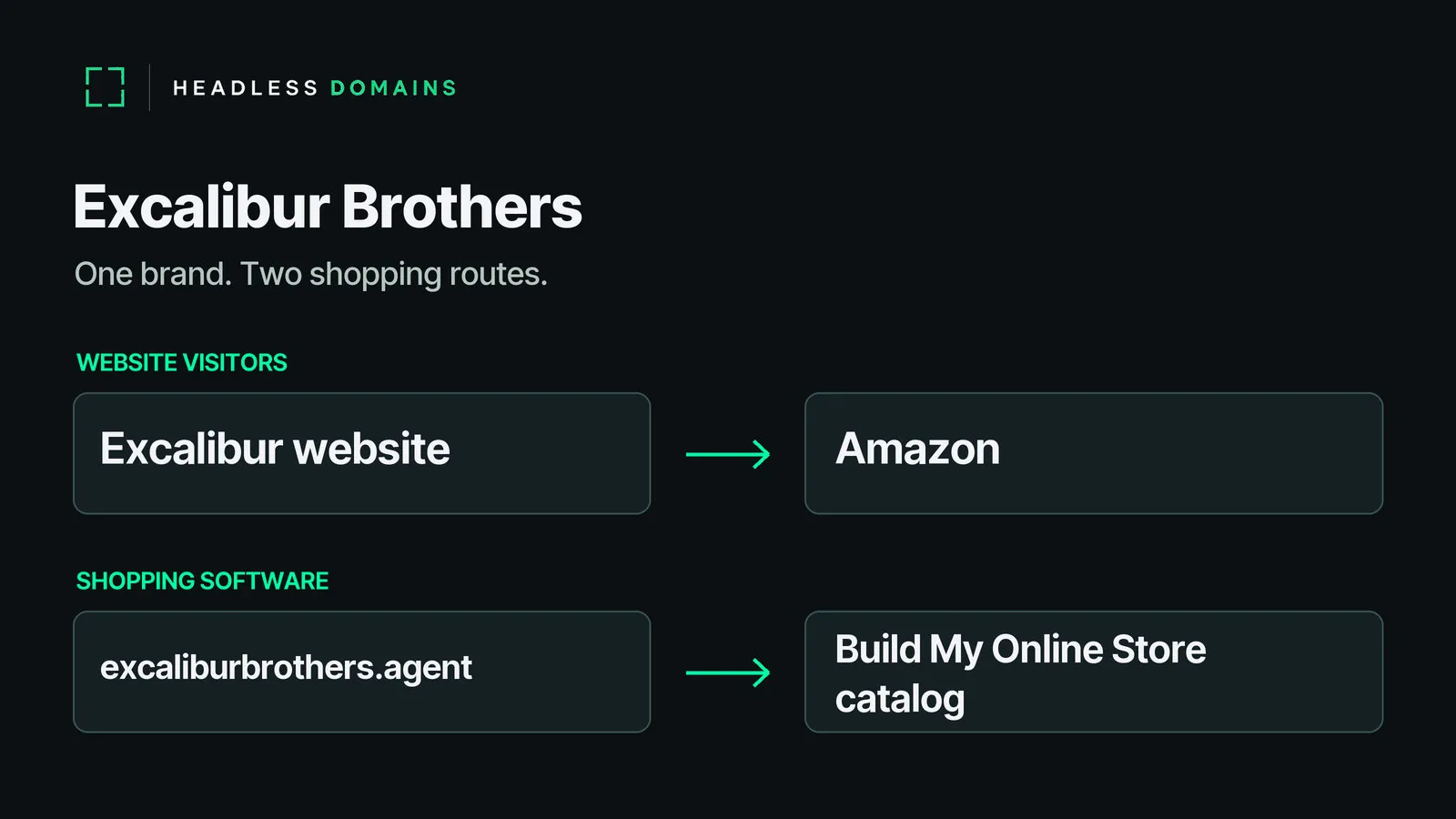
Excalibur Brothers sells leather flasks, watch rolls and polishing cloths. The watch-roll and flask purchase links on its website lead to Amazon, while the directory entry for excaliburbrothers.agent points to a separate Build My Online Store catalog containing nine products.
The Build My Online Store catalog lists the brown leather flask set at $34.95, with an eight-ounce stainless steel flask, two shot glasses and a funnel. A buyer can check what comes in the box, and an agent can read the same details from the catalog.
What Build My Online Store adds to a Shopify store
Shopify already connects eligible stores with ChatGPT product discovery and sends buyers to the merchant’s checkout. Build My Online Store adds a catalog you can manage separately, choosing a narrower selection for a feed or product display while your main shop keeps the full range. You also choose the purchase links; Shopify continues handling checkout and orders when those links lead back to Shopify.
Clarendale gives agents a direct route to the products it sells through Shopify. For the store’s Aureva clip-on earrings, the Build My Online Store catalog data file for AI agents includes a Shopify product-page link and a cart link for the “1 Gold + 1 Silver” selection. Across 1,978 product records, 226 include Shopify cart links. The merchant can publish an additional assortment for agents and direct interested buyers back into Shopify, keeping the existing checkout and order workflow.
At New York Bar Store, shoppers browsing Excalibur polishing cloths see White, Gray and Assorted two-packs, each with its own Buy Now button. Build My Online Store supplies those choices on the store’s own product page and publishes a separate catalog of 116 products for agents. You can use Build My Online Store to add product options and buying links to pages you already run, and publish a selected range for agents from the same catalog system.
How HeadlessDomains.com connects an agent name to your catalog
For Excalibur Brothers, HeadlessDomains.com maintains the public name and lookup service, while Build My Online Store supplies the catalog. The merchant can update the destination behind the name when the catalog or agent service moves, keeping a recognizable reference for customers and software. Agents find the current destination through API and command-line tools, following an instruction file written for AI agents.
Start with a product question your team has already answered and publish the approved answer with the offer it describes. Then choose the products and purchase links for your Build My Online Store catalog and connect the service to a public name at HeadlessDomains.com.
Explore how AI shopping agents choose a seller for the factors involved in competing for an order.
Follow What to Do After Registering a Headless Domain: 7 Next Steps to connect your public name to useful service information.