ChatGPT Sent the Customer. Who Handles the Return?
“I gave him half the money back and called it a day,” VillageHomeF wrote on r/shopify.
The customer had photographed a power cord, asked ChatGPT to find it, and bought the suggested cords without reading the product description. When the cords turned out to be wrong, he returned to the retailer. The pair laughed about the mistake, and the seller agreed to a partial refund.
A pleasant ending, with the shop paying for it. The assistant had helped choose the purchase, but the seller had to decide how much money to give back.
AI shopping mistakes can turn into “not as described” disputes
On eBay, AndrewStackson faced a return over a Patagonia jacket after the buyer used ChatGPT to identify it as a different model. The seller disputed the identification and pointed to the model number. AI advice had entered the argument after delivery.
In the same discussion, Carpe_deis reported a buyer using ChatGPT to select a bicycle size. According to the seller, the buyer received the size ordered, discovered it didn’t fit, then filed an “item not as described” return despite the listing’s buyer-paid return policy. The seller disputed the reason for the claim.
Under eBay’s return-shipping rules, sellers pay return postage for damaged, faulty or misdescribed goods. When buyers order the wrong item or change their minds, the seller’s return policy determines who pays.
A complaint about an AI recommendation can therefore become a dispute over the listing itself. Before deciding how to settle it, the merchant has to establish whether the shop sent the wrong product, the description made an inaccurate promise, or the buyer ordered an unsuitable item. Calling every case an “AI return” obscures the difference.
Who handles ChatGPT shopping returns?
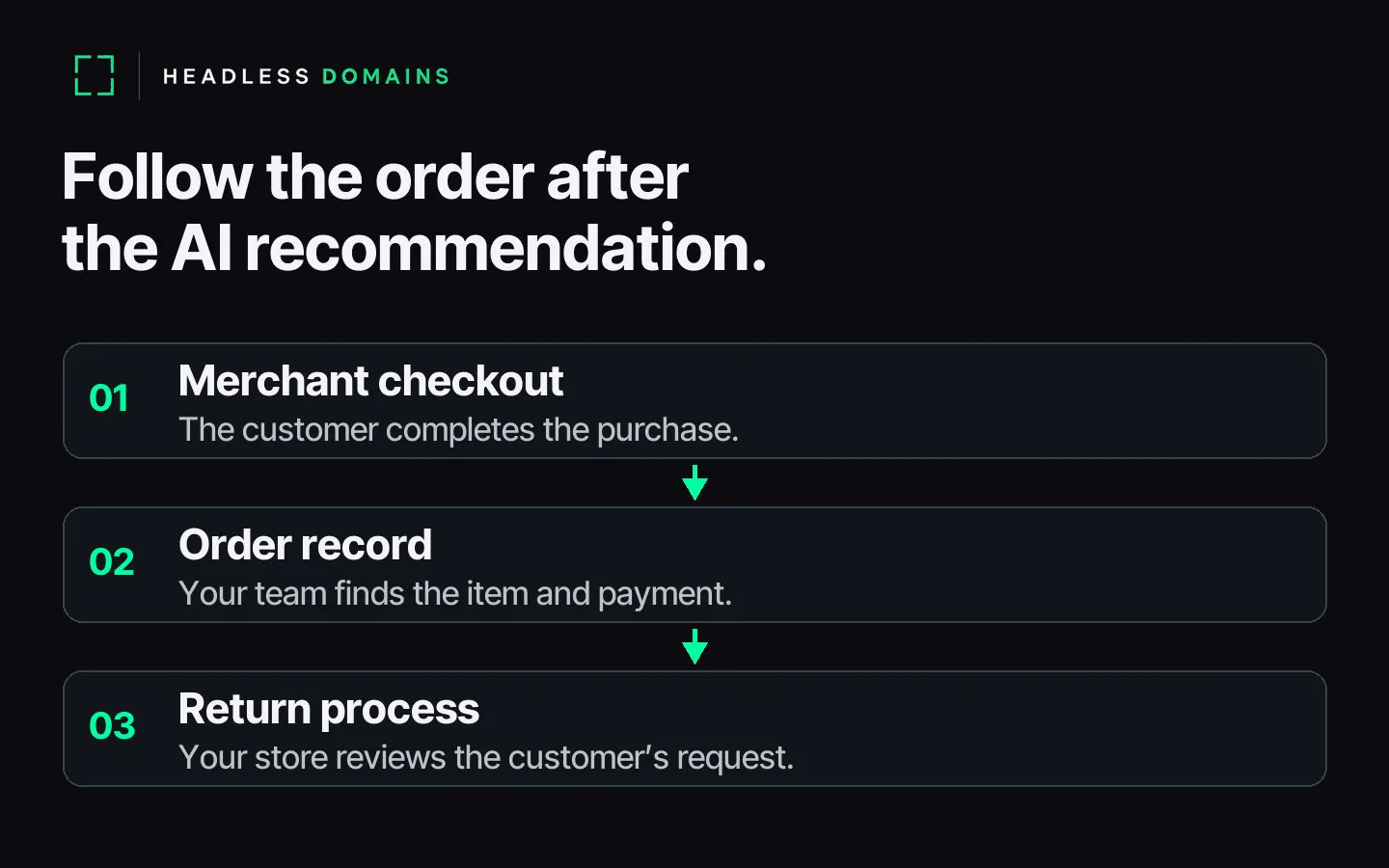
For Shopify’s ChatGPT channel, shoppers complete the purchase at the merchant’s own checkout, inside an in-app browser or a new browser tab. Shopify supports the store’s checkout customizations and payment methods. The customer may remember discovering the product in ChatGPT, while the retailer holds the order.
Shop also places returns, refunds and product support with the retailer when a personal agent helps someone buy.
Ask for the order reference and, when available, a screenshot of the disputed recommendation. Compare the promised model, size or accessory with the product listing and the item delivered. Staff can then address the specific mismatch.
Return reasons reveal where the AI-assisted sale went wrong
| What happened | What establishes the facts | What the merchant can act on |
|---|---|---|
| The assistant recommended an unsuitable item | The recommendation, purchased model or size, and product description. | Apply the relevant return terms or agree an exception; clarify the buying detail customers misunderstood. |
| The buyer disputes the product’s identity | The model number, listing and photographs of the delivered item. | Resolve the product identification before treating the assistant’s answer as proof of a listing error. |
| The shop sent a different item from the order | The ordered variant alongside the item in the parcel. | Correct the fulfillment mistake and arrange the applicable replacement or refund. |
| The buyer expects a refund after asking about eligibility | The actual request, merchant decision and payment record. | Explain the current stage and the action moving the return toward completion. |
Keep the customer’s explanation with the return record. A generic “wrong item” label loses the distinction between the wrong recommendation and the wrong parcel. Over several cases, the detail gives you a way to spot repeated questions about a particular product and decide whether the description, selection or packing process deserves attention.
Give the person building your store’s agent the customer’s question and the correct product information. They can test whether the agent answers the question accurately before another shopper relies on it.
Keep AI shopping orders connected to your existing store
An apparel merchant shipping about 300 orders a month asked other Shopify sellers for help with exchanges and inventory. They were manually charging for exchange shipping and restocking returns, and wanted a better arrangement without rebuilding everything a year later.
One respondent, s2white, explained a practical choice: customers bought the replacement immediately, then received a refund for the original after its return. The merchant avoided making the customer wait for an exchange while the replacement risked selling out.
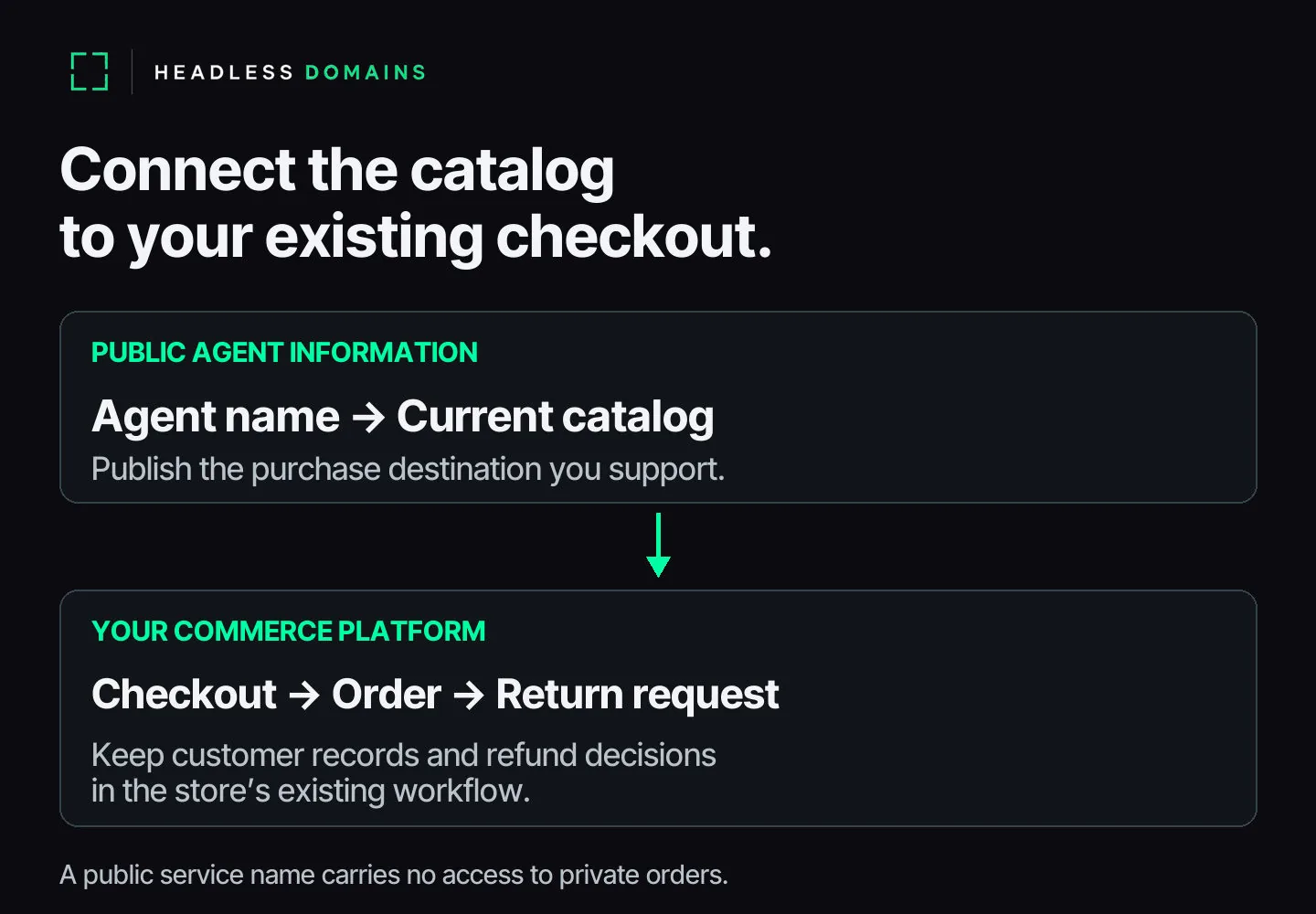
Build My Online Store lets you publish a selected product range for a custom or partner agent and choose the purchase destinations attached to the products, including Shopify, WooCommerce and custom checkout routes. Direct purchases into your existing store and staff can handle the resulting orders in the system they already use.
For an agent working alongside the shop, a name through HeadlessDomains.com gives other agents a public reference for its current service. You can replace the catalog or move the agent software and update the destination behind the same name. Publish the name on your established website and share it with partners.
Your store’s order system continues controlling access to private purchases and permission to issue refunds.
A return request isn’t a completed refund
An assistant can tell a customer an item qualifies for a return before the store has received a request. Even after approval, staff may still await the parcel or inspect it before issuing a refund.
Shopify’s self-serve return process keeps the customer’s request and the merchant’s decision separate. Customers submit requests from their order status page; merchants review them and can approve or decline under the store’s rules. Approval lets staff provide shipping instructions and return labels or add exchange items.
Give the buyer the actual status and the next action. Keep any assistant answering return questions tied to the same distinction, so a policy explanation doesn’t sound like permission to ship a parcel or confirmation of money already on its way.
Connect your commerce agent to the product information and checkout your business maintains, then give it a public name through HeadlessDomains.com. Customers may begin with somebody else’s recommendation; give their agents a direct way to find the business responsible for the offer.
After choosing the name, follow the seven steps for connecting it to your service.